LPG to CBG Conversion
Replace LPG with CBG.
Smart. Sustainable. Cost-effective. A complete small-scale CBG system — cascade trolleys plus a two-stage pressure reduction skid — that lets restaurants, hotels, canteens and small industries switch from LPG cylinders to clean, renewable Compressed Biogas.
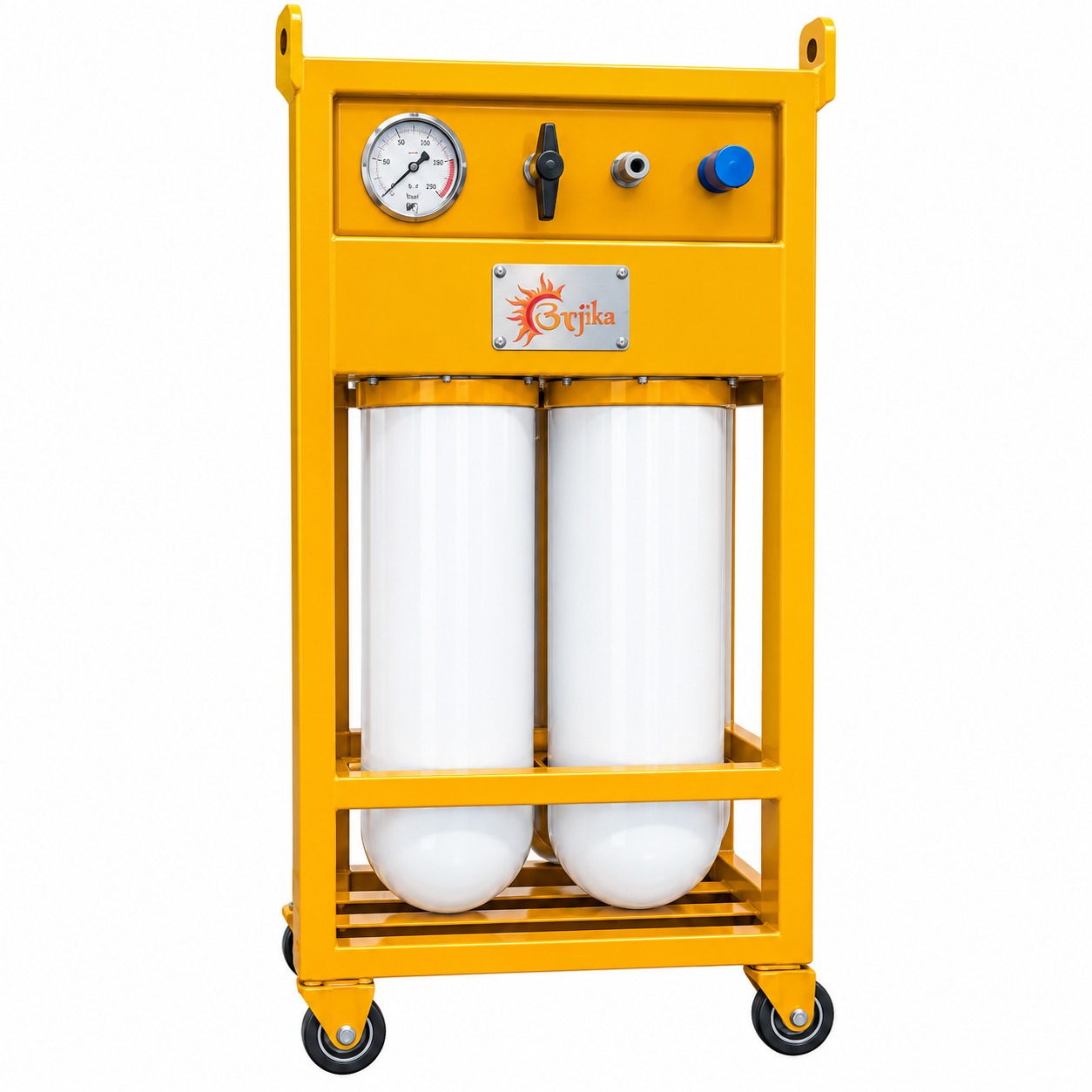
Why commercial kitchens are moving from LPG to CBG
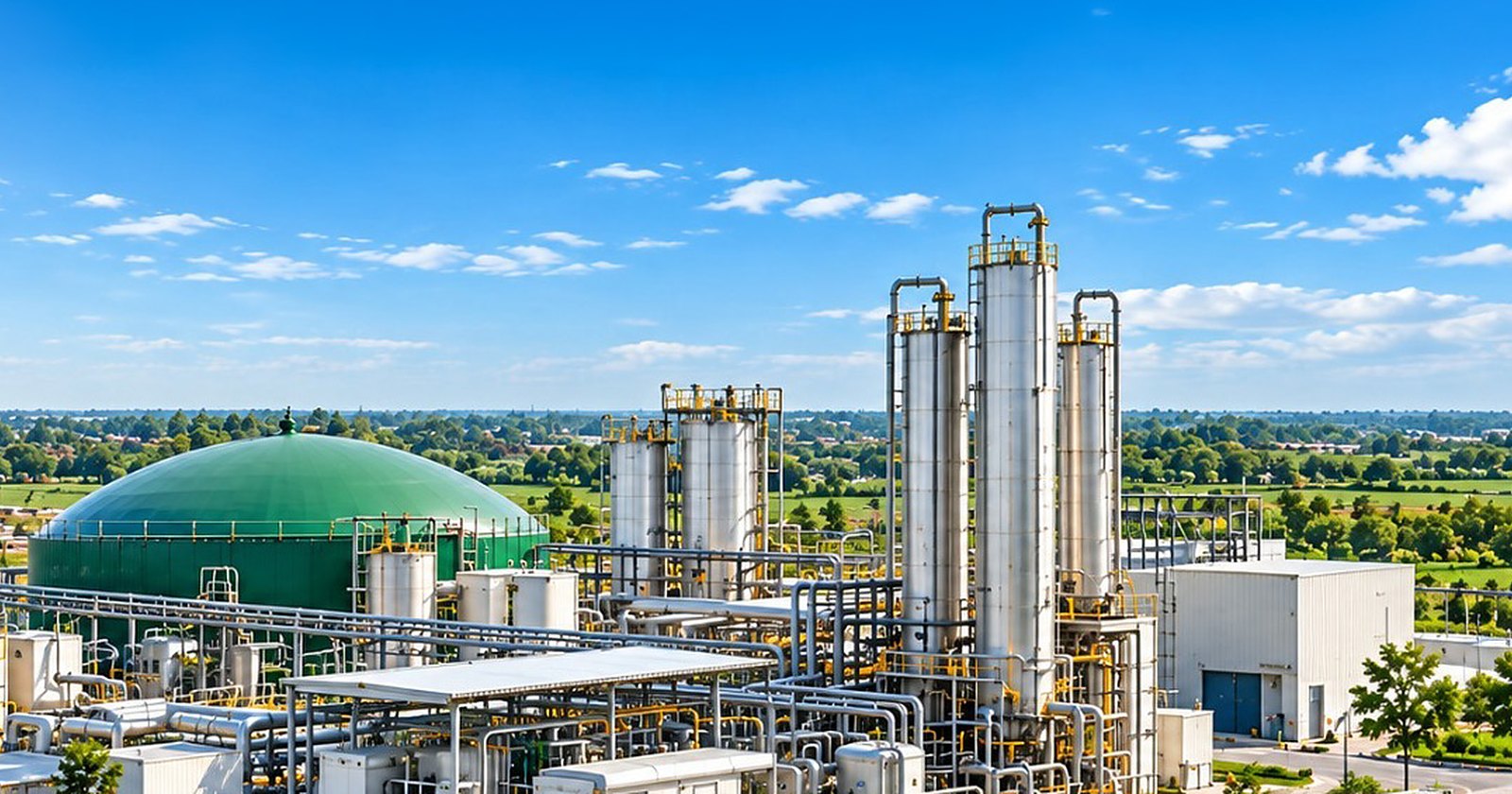
CBG is purified biogas — at least 90% methane — made from agricultural and organic waste in India. It burns like natural gas, and our small cascade + PRS system brings it to sites that have no pipeline connection.
From CBG plant to your burner
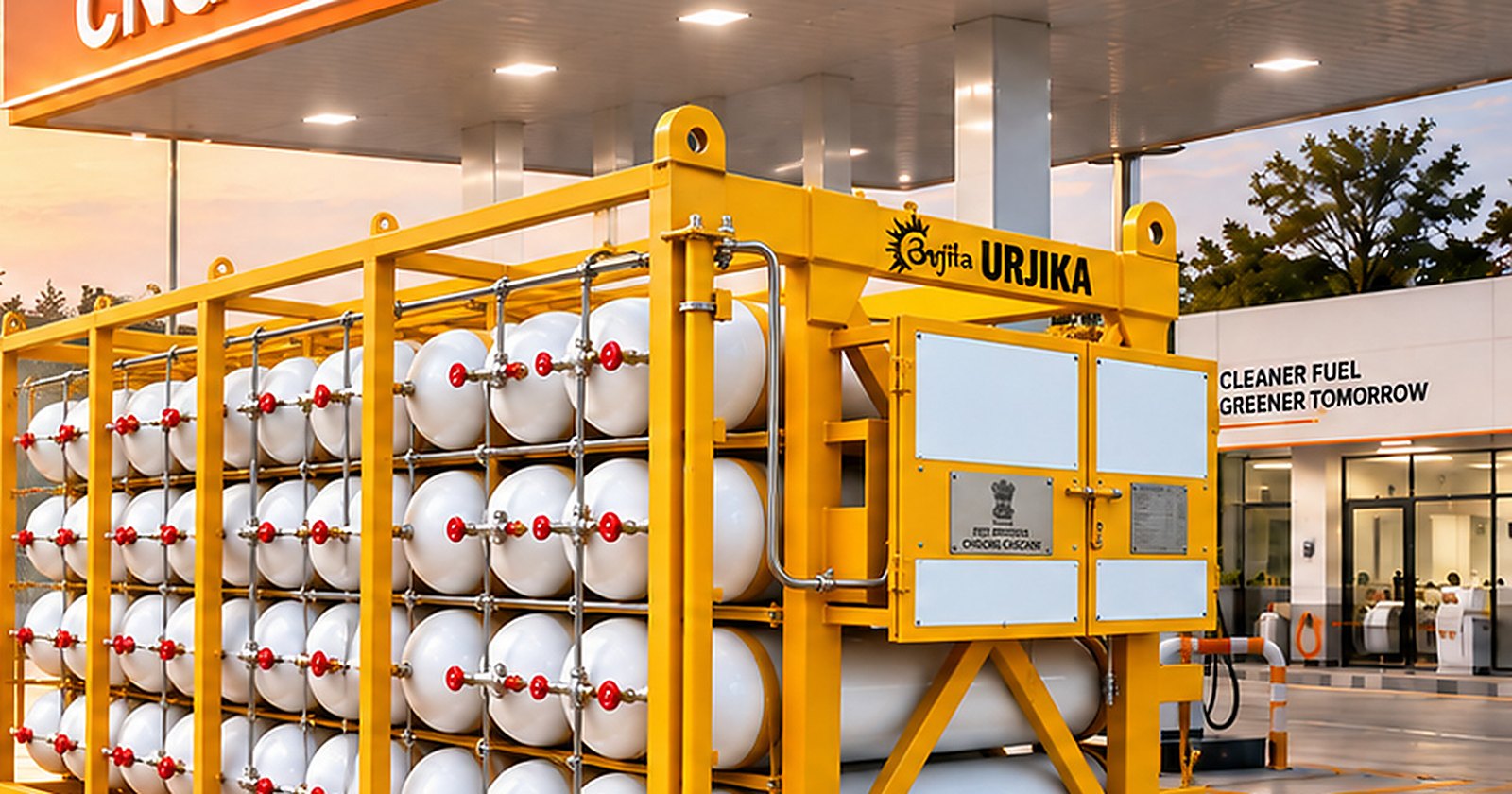
The cascade trolley stores CBG at 250 bar. The pressure reduction skid brings it down in two controlled stages to the pressure your appliances need.
How much CBG do I need to replace LPG?
Three steps — the same ones our calculator follows.
Based on net calorific values: LPG ≈ 46.1 MJ/kg, CBG (≈95% methane) ≈ 44.9 MJ/kg. Final sizing is confirmed after a site survey.
Size your LPG to CBG system in 60 seconds
Enter your current LPG use. The calculator recommends the cascade trolley and pressure reduction skid, shows your refill frequency and gives an indicative package price — instantly.
Your recommended CBG package
1 working + 1 standby trolley, and one PRS sized for your peak flow.
Gas requirement
| Quantity | Per day | Per month |
|---|---|---|
| LPG used (kg) | 38.0 | 1,140 |
| Energy (MJ) | 1,752 | 52,554 |
| CBG required (kg) | 39.0 | 1,170 |
| CBG required (Sm³) | 54.3 | 1,628 |
Flow rate
| Case | kg/h | Sm³/h | kW |
|---|---|---|---|
| Average over 8.0 h | 4.88 | 6.78 | 61 |
| Peak (factor 2.0) · governs | 9.75 | 13.57 | 122 |
| PRS design flow (+10%) | 10.73 | 14.92 | 134 |
Trolley sizing & refills
| Gas needed per working trolley | 39.0 kg |
| Selected model | CBG-06 (6 × 50 WL) |
| Usable CBG per trolley | 56.4 kg |
| Trolley lasts at average use | 11.6 h (1.4 days) |
| Refills per month | 20.8 |
| Footprint per trolley (H × W × D) | 1550 × 1935 × 645 mm |
Get your quotation
Enter your details to see the price and download your quotation on Urjika letterhead.
Fields marked * are mandatory. We use these details only to prepare your quotation and contact you.
Engineering estimate for budgeting. Final sizing and price are confirmed after a site survey. PRS stage 1: 250 → 4 bar; stage 2: 0.5–1 bar.
CBG small cascade system + pressure reduction system
Standard models for fast delivery. We also design custom solutions for larger or special applications.
CBG cascade trolleys
50 WL cylinders · 250 bar · 1 working + 1 standby
| Model | Cylinders | Water capacity | CBG approx. | Dimensions H×W×D | Weight |
|---|---|---|---|---|---|
| CBG-01 | 1 | 50 WL | 10 kg | 1550 × 375 × 645 mm | 100 kg |
| CBG-02 | 2 | 100 WL | 20 kg | 1550 × 645 × 645 mm | 200 kg |
| CBG-04 | 4 | 200 WL | 40 kg | 1550 × 1290 × 645 mm | 400 kg |
| CBG-06 | 6 | 300 WL | 60 kg | 1550 × 1935 × 645 mm | 600 kg |
| CBG-08 | 8 | 400 WL | 80 kg | 1550 × 2580 × 645 mm | 800 kg |
| CBG-10 | 10 | 500 WL | 100 kg | 1550 × 3225 × 645 mm | 1,000 kg |
CBG approx. at 250 bar. Width scales with the number of cylinder pairs; height and depth stay constant. Final dimensions may vary ±50 mm. High-pressure hose to connect trolley and PRS is supplied to suit the site.
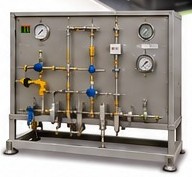
Pressure reduction skids (PRS)
Two-stage regulation · sized by peak flow
| Model | Flow (kg/h) | Sm³/h | Recommended for |
|---|---|---|---|
| PRS-02 | 2 | 2.8 | Canteen / small kitchen (1–2 burners) |
| PRS-05 | 5 | 7.0 | Small restaurant (3–5 burners) |
| PRS-10 | 10 | 13.9 | Medium restaurant / dhaba (6–10 burners) |
| PRS-20 | 20 | 27.8 | Large kitchen / hotel / industrial (10+ burners) |
Burners needing 21–37 mbar require an additional appliance regulator after the PRS. Above 20 kg/h we design a custom skid or parallel skids.
Who switches from LPG to CBG
From enquiry to first flame
Before designing any CBG system we ask only three questions: how many LPG cylinders you use, how many hours you operate, and what pressure your burners need.
- 01Share your LPG useUse the calculator or tell us your cylinders, hours and burners.
- 02Site surveyWe check space, ventilation, appliances and the pressure they need.
- 03Sizing & quotationTrolleys, PRS and hose sized for your peak — with a firm quote.
- 04Supply & installationTrolleys and PRS built in-house, installed and leak-tested.
- 05Commissioning & supportBurner changeover guidance, trial run, handover and service support.
LPG to CBG — frequently asked questions
Q.How much CBG replaces one 19 kg LPG cylinder?
Q.Can my existing LPG burners run on CBG?
Q.What pressure does the pressure reduction skid deliver?
Q.How often will I need to refill CBG?
Q.Is CBG safe to use in a commercial kitchen?
Q.What is CBG?
Q.Which PRS model do I need?
Get a firm quote for your site
Send us your details — your calculator result is attached automatically. Our engineer will call you to plan a site survey.