Odorization Units
Skid-mounted odorizing systems that dose Ethyl Mercaptan or TBM+MES into CBG and natural gas — proportional to real gas flow, controlled by PLC.
100 – 10,000 SCMHLP & HP models0.2 – 1 L/hr injectionPLC + 7" HMI
20+
CBG plant odorizer units delivered
100 – 10,000
SCMH gas flow range
12 – 25
mg/SCM typical odorant concentration
0 – 10 bar
Dosing pressure (LP model)
Overview
Safety you can smell
Natural gas and CBG are odourless. Odorization adds a small, precisely controlled quantity of odorant so any leak can be detected by smell — a mandatory safety requirement for gas supplied into CGD networks and for CBG dispatched from plants.
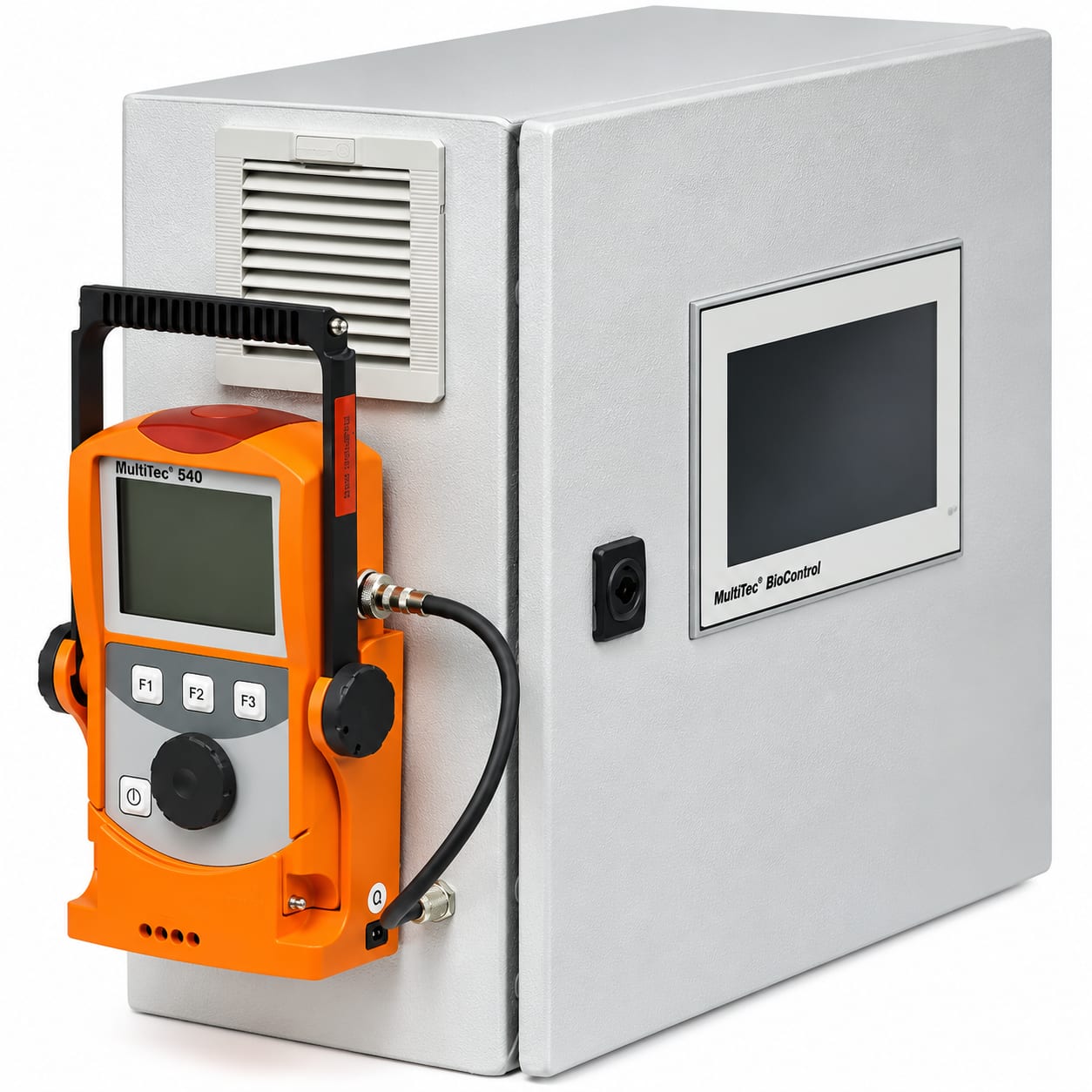
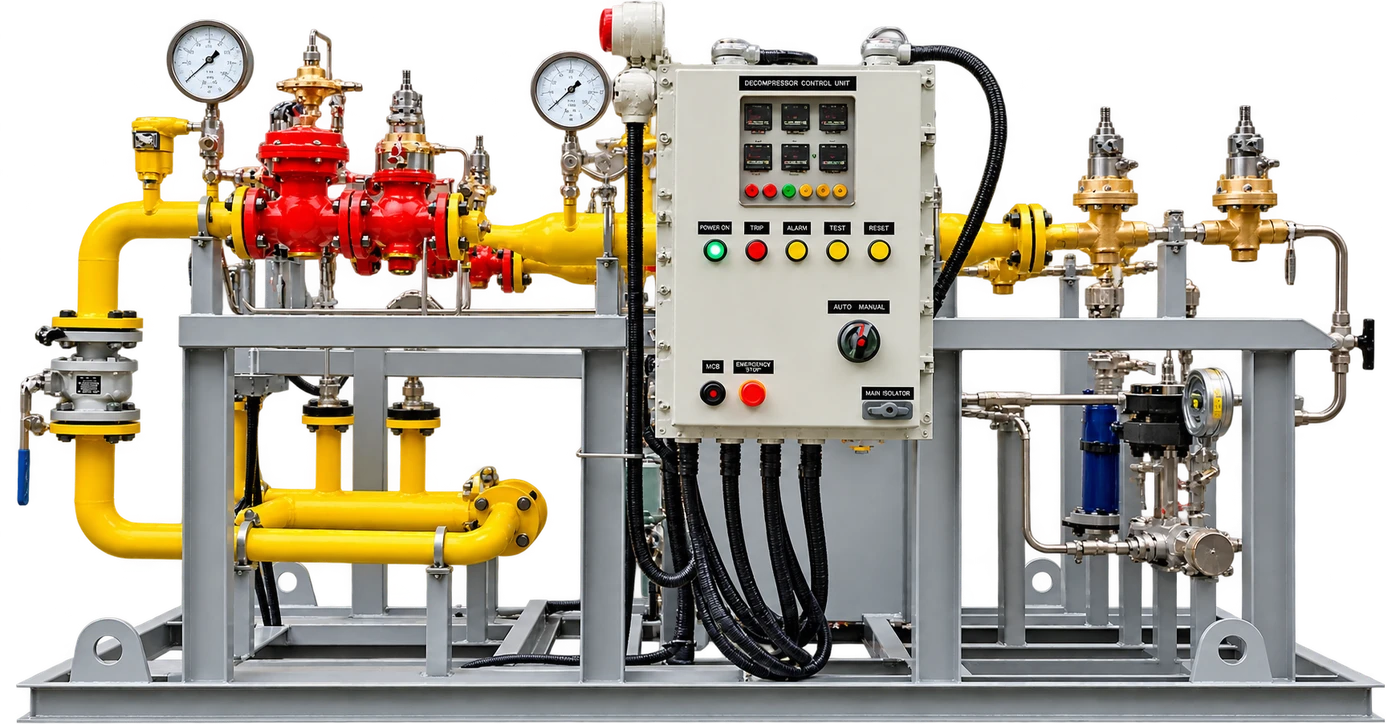
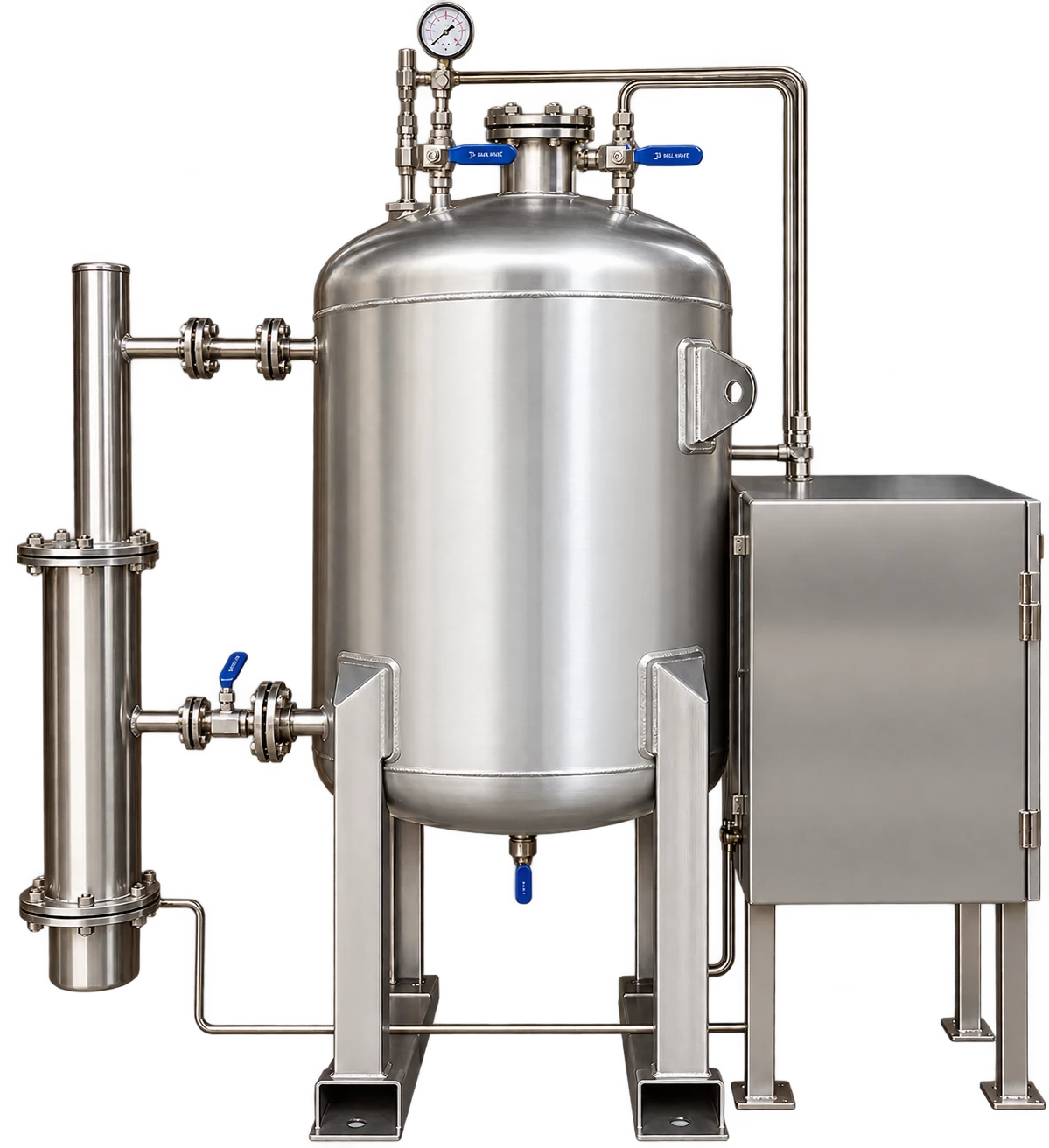
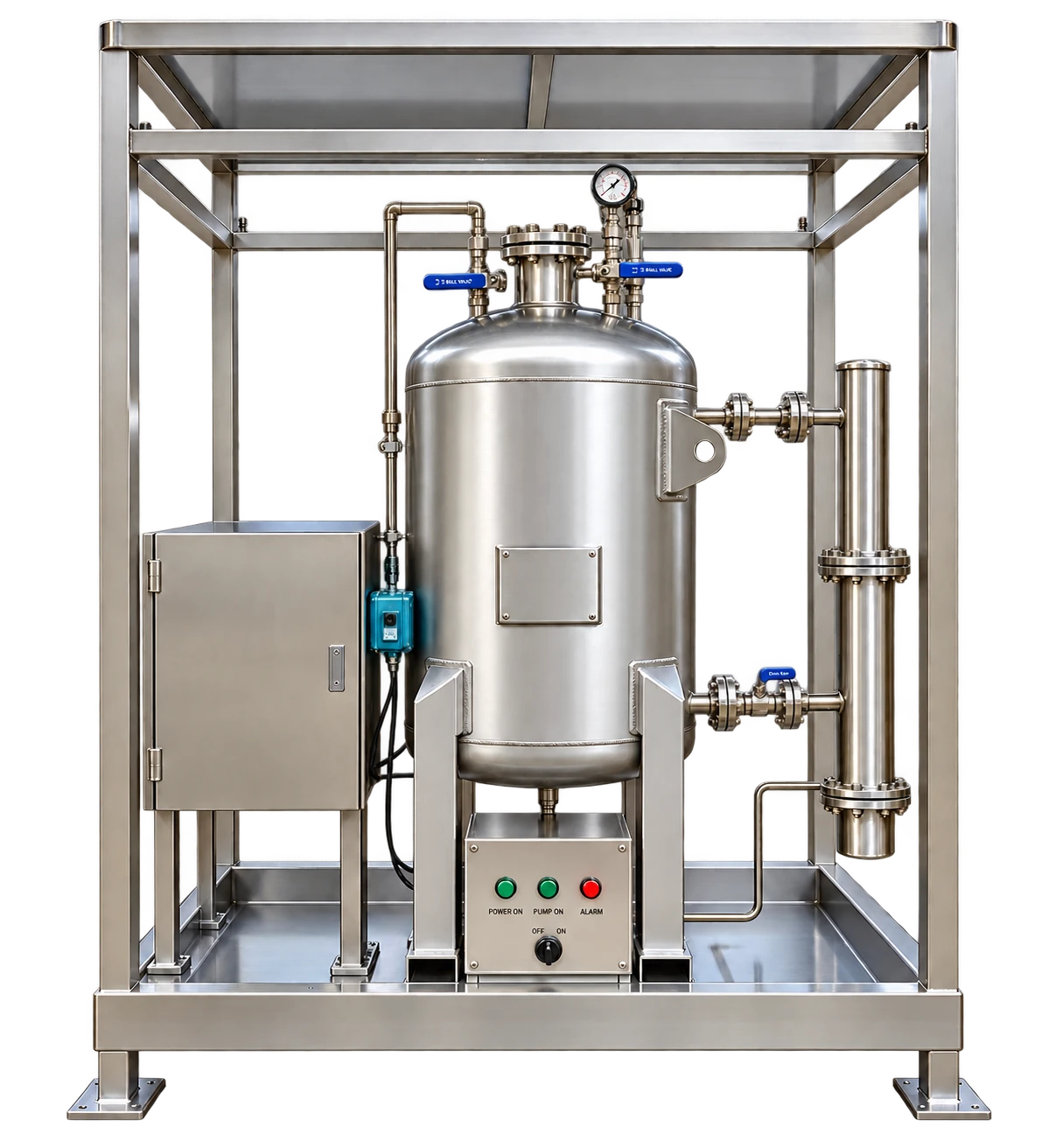
Urjika designs and fabricates complete odorizing skids in-house: SS 304 storage tank, pneumatically driven SS 316 dosing pump, PLC-based control panel with 7" touchscreen HMI, scrubber, flame arrestor and drain tray — tested at our works before dispatch and commissioned by our own team.
Models
Low pressure and high pressure models
Low pressure
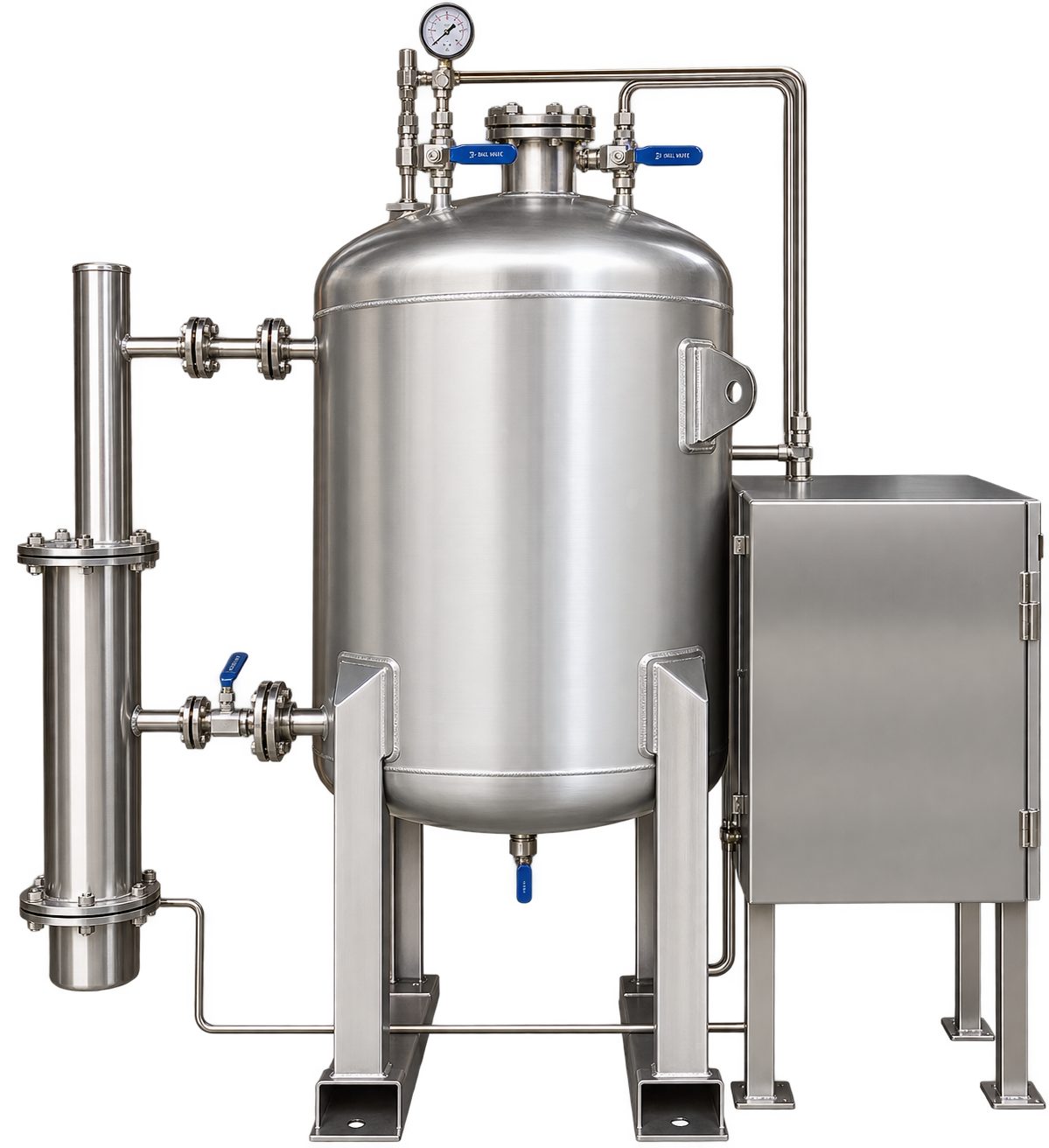
LP Odorizer (0.1 – 5.0 bar)
For pipeline injection, grid injection and city gate applications.
Gas flow 100 – 10,000 SCMH
Dosing proportional to real flow
High pressure
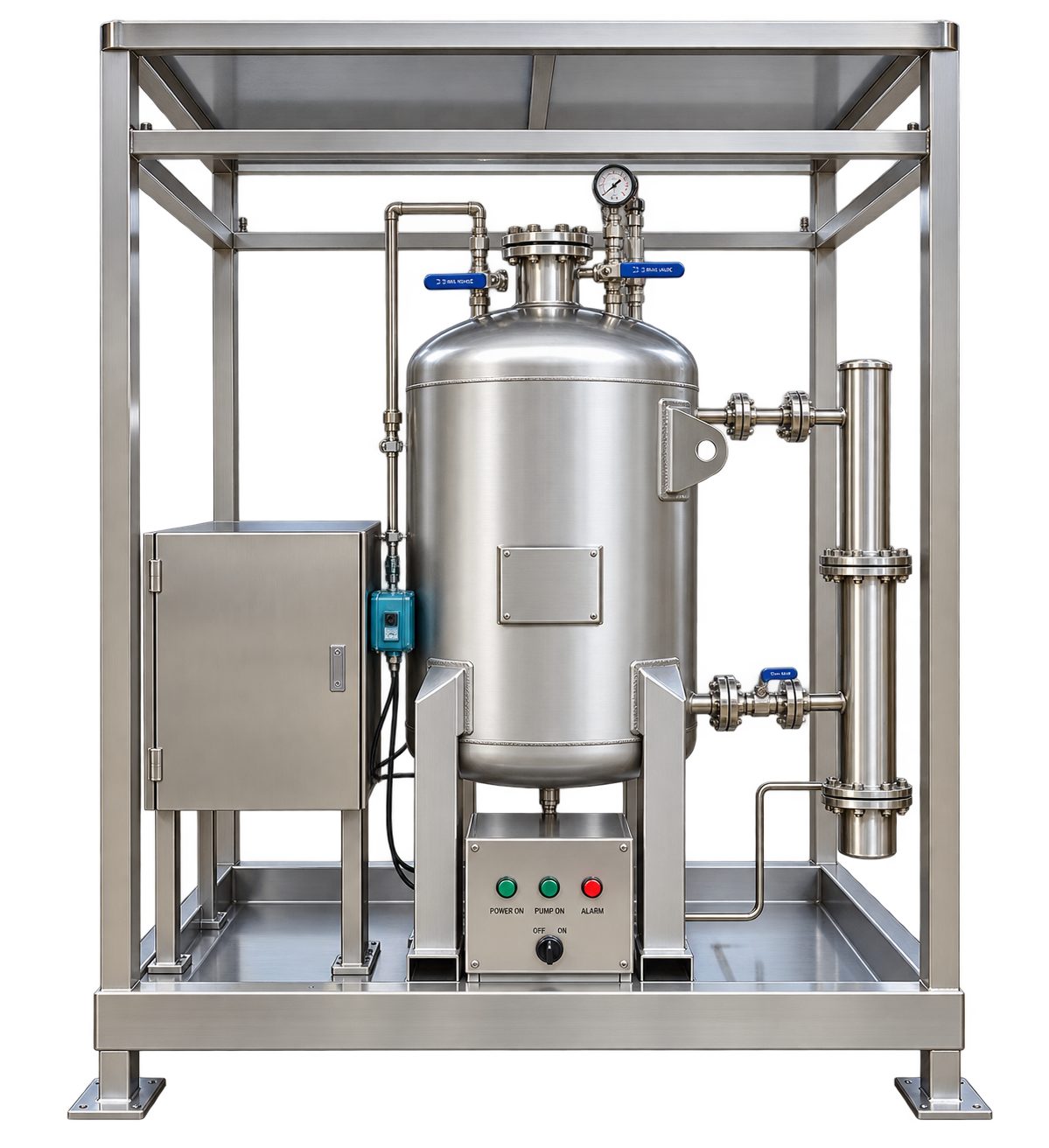
HP Odorizer (250 bar)
For odorizing compressed CBG at plant discharge before cascade filling.
Rated for 250 bar service
Same PLC control platform
Technical specifications
Complete odorizing skid
Process
Models
Low pressure (0.1–5.0 bar max.) / high pressure (250 bar)
Gas flow
100 to 10,000 SCMH
Odorant
Ethyl Mercaptan or TBM+MES
Concentration
12–25 mg/SCM or as required
Working temperature
0°C to +60°C
Pump & dosing
Pump
Positive-displacement, fixed-volume, SS 316
Drive
Pneumatic (air / NG / N₂), 4–8 bar
Injection rate
0.2 to 1.0 L/hr
Dosing mode
Proportional (4–20 mA flow signal) or fixed-rate
Stroke control
Via Ex solenoid valve; manual stroke adjustment
Storage tank
Capacity
100 / 200 L
Material
SS 304
Instruments
Magnetic level gauge, pressure gauge, PSV
Tank pressurization
Gas / N₂ regulator, 2–3 bar
Sizing guide
200 L recommended for up to 5,000 SCMH
Control & communication
Controller
PLC with 7" HMI touchscreen
Power
230 V AC (UPS) with 24 V DC SMPS
Panel
MS powder-coated, safe-area installation
Communication
Optional RS-485 / TCP-IP Modbus
Consumption
Approx. 17.5 W at 24 V DC
Skid & safety
Construction
Fully skid mounted
Included
Dosing cabinet, scrubber, flame arrestor, drain tray (110%)
Tubing
SS 316 1/4" OD, ASTM A269
Footprint
Approx. 1.4 m × 1.5 m × 2.0 m (200 L)
Sun shed
SS 304 (optional)
Quality & support
Factory test
Tank RT/DPT, hydrotest, PSV test, dosing & performance test
Site test
Dimensional, P&ID, pressure and performance checks
Training
On-site operator training
Warranty
1 year from delivery
Support
24×7 online support, 2 visits in the first year
How it works
Dosing proportional to real gas flow
01
Flow signal
4–20 mA from the gas flow meter
02
PLC calculates
Required odorant dose
03
Pump stroke
SOV pulses the pneumatic pump
04
Injection
Odorant enters the gas line
05
Monitoring
Tank level and pressure on HMI
Applications
Where odorization is required
CBG Plants
Odorizing CBG before dispatch through cascades.
Grid Injection
Proportional dosing before CBG enters CGD networks.
City Gate & CGS
Natural gas odorization at network entry.
DCU Stations
Odorization at decompression and injection points.
Gallery
Our odorizing skids
FAQ
Frequently asked questions
Q.Why is odorization mandatory for CBG?
CBG is odourless. Adding odorant allows leaks to be detected by smell, which is a key safety requirement for gas supplied into CGD networks and for CBG dispatched from plants.
Q.What support do you provide?
1-year warranty, on-site training, 24×7 online support and two service visits in the first year, with AMC options afterwards.
Q.Which odorant should I use?
Ethyl Mercaptan or TBM+MES are commonly used. For grid injection, the odorant should preferably match the one used by the CGD entity.
Q.How is the dose controlled?
The PLC reads the live gas flow signal and adjusts pump strokes so dosing stays proportional to flow. A fixed-rate mode is also available.
Need PESO-compliant odorization?
Share your flow and pressure — we will recommend the right model.
Explore more