Introduction
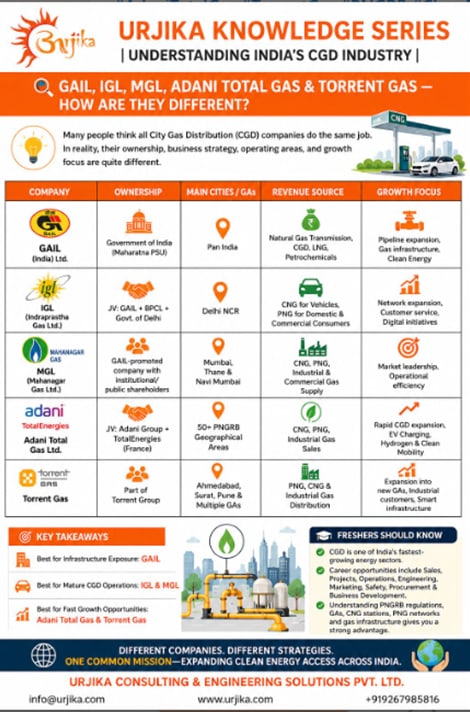
India’s City Gas Distribution (CGD) industry plays an important role in expanding access to natural gas for households, industries, commercial establishments and transportation.
The Petroleum and Natural Gas Regulatory Board (PNGRB) is a key regulatory authority in India’s downstream natural gas sector. It authorises eligible entities to develop CGD networks and establishes regulations relating to areas such as network development, safety, access and service quality within its statutory scope.
Understanding PNGRB helps industry professionals see how regulation shapes the development and operation of gas infrastructure.
The Industry Challenge
The expansion of CGD networks requires more than investment in pipelines and CNG stations. Projects also depend on regulatory requirements, engineering expertise, skilled manpower, operational efficiency and safety compliance.
For professionals working in the gas sector, understanding this regulatory environment can help them make better decisions, strengthen their technical knowledge and identify opportunities for career development.
How PNGRB Can Influence Career Opportunities
PNGRB does not directly determine employee salaries. Its influence on career opportunities is indirect, through the regulatory framework that shapes industry development and operations.
The relationship can be understood through the following chain:
Regulatory framework → CGD network development → Project and operational requirements → Demand for skilled professionals → Career opportunities
As companies develop and operate gas infrastructure, they may require professionals across engineering, construction, commissioning, operations, maintenance, safety, compliance, procurement and sales. Actual hiring and salary growth depend on investment, project pipelines, business performance, individual skills and market conditions.
Career Areas Connected to the CGD Industry
- Engineering and EPC: Pipeline design, project execution, installation and commissioning.
- CNG and PNG Operations: Station operations, gas distribution and maintenance.
- Safety and Compliance: Understanding applicable regulations, safety procedures and documentation.
- Project Management: Planning, coordination, execution and timely delivery of projects.
- Sales and Business Development: Understanding customer requirements, infrastructure development and market opportunities.
- Procurement and Technical Sales: Evaluating equipment, specifications, supplier capabilities and project requirements.
Practical Example
Consider a CGD company planning to expand its natural gas distribution network and add CNG infrastructure in an authorised geographical area.
The project may involve pipeline development, station equipment, high-pressure gas systems, installation, commissioning and ongoing maintenance. Depending on the project scope and applicable requirements, the company may need engineers, technicians, project managers, safety professionals, procurement specialists and sales teams.
A professional who understands the CGD ecosystem and the relevant regulatory framework may be better equipped to coordinate with stakeholders, understand project requirements and contribute to execution.
However, knowledge of PNGRB alone does not guarantee a promotion or salary increase. It becomes more valuable when combined with practical experience, technical competence, communication skills and a strong understanding of the business.
What Professionals Can Do to Improve Their Career Prospects
- Understand the regulatory framework: Learn the role of PNGRB and identify which regulations apply to your work.
- Build technical knowledge: Develop an understanding of CNG stations, PNG networks, gas equipment and project execution.
- Strengthen compliance awareness: Become familiar with relevant documentation, safety requirements and approval processes.
- Develop commercial understanding: Learn how projects are planned, procured, executed and maintained.
- Demonstrate measurable value: Improve project coordination, customer handling, problem-solving and delivery performance.
- Keep learning: Follow official regulatory updates and develop skills relevant to your target role.
Relevance to Urjika Consulting & Engineering Solutions Pvt. Ltd.
For companies working in CNG, CBG and clean-energy infrastructure, understanding the regulatory environment helps teams align equipment selection, engineering activities and project execution with applicable requirements.
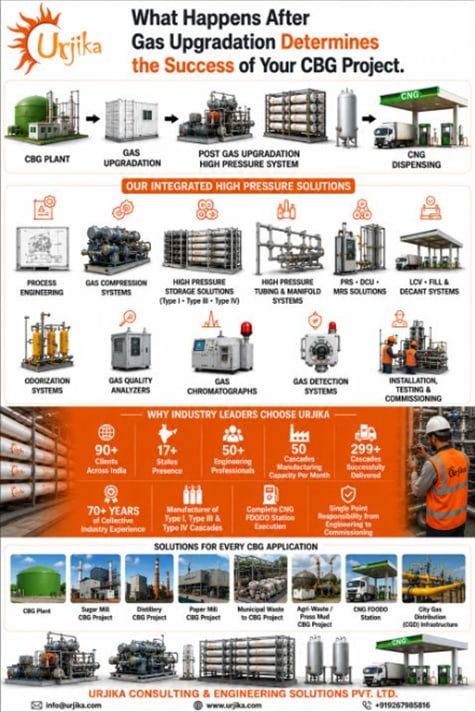
Urjika’s work across gas infrastructure solutions—including cascades, compressors, dispensers, LCV fill posts, high-pressure tubing and installation and commissioning—connects with the technical and operational needs of the wider gas ecosystem.
A sound understanding of the industry helps technical, sales and project teams communicate more effectively with customers and understand the broader context behind project requirements.
Specific approvals and compliance obligations depend on the project, equipment, applicable laws and relevant regulatory requirements.
Conclusion
PNGRB is an important part of India’s downstream natural gas regulatory ecosystem. While it does not directly set salaries, its framework can influence infrastructure development and the operating environment in which CGD businesses function.
For professionals, the best approach is to combine regulatory awareness with technical knowledge, practical experience and business understanding.
Know the regulator. Understand the industry. Build skills that move your career forward.