Introduction
India’s gas sector plays an important role in transportation, household energy, industrial operations, and the transition towards cleaner fuels. Terms such as CNG, PNG, CBG, and CGD are frequently used in the industry, but each refers to a different part of the gas value chain.
To understand how the sector works, it is important to distinguish between the types of gas, the infrastructure used to transport and distribute them, and the companies responsible for bringing gas to end users.
This case study explains how conventional natural gas and Compressed Biogas (CBG) move from their sources to customers in India.
Understanding CNG, PNG, CBG and CGD
CNG — Compressed Natural Gas
CNG is natural gas compressed to high pressure for storage and use, primarily as a transportation fuel.
Common applications include:
- Cars and taxis
- Buses
- Commercial vehicles
- Other compatible gas-powered vehicles
CNG is typically stored at high pressure, with vehicle-fuelling systems designed around applicable pressure and safety requirements. It can reduce certain vehicle emissions compared with petrol or diesel, although the actual benefit depends on the vehicle, fuel, and operating conditions.
PNG — Piped Natural Gas
PNG is natural gas delivered to customers through a pipeline network.
Common applications include:
- Residential cooking
- Hotels and commercial kitchens
- Industrial heating and process applications
- Other suitable commercial uses
Unlike LPG supplied in cylinders, PNG reaches connected customers through a pipeline. The gas is measured and supplied according to the applicable metering, commercial, and safety requirements.
CBG — Compressed Biogas
CBG is produced by upgrading biogas generated from biodegradable materials, including agricultural residues, cattle dung, food waste, and other suitable organic feedstocks.
A typical production process includes:
- Collecting and preparing organic feedstock.
- Producing raw biogas through anaerobic digestion or another suitable process.
- Removing carbon dioxide, moisture, hydrogen sulphide, and other impurities as required.
- Testing the upgraded gas against the applicable quality specifications.
- Compressing and storing the gas for transportation or delivery.
When upgraded to the required specifications, CBG can be used in suitable natural-gas applications. Its compatibility with a particular pipeline, vehicle, or industrial system depends on gas quality and the applicable requirements.
CGD — City Gas Distribution
CGD is not a type of gas. It refers to the distribution business and infrastructure that deliver natural gas to customers within an authorised geographical area.
A CGD network may include:
- Underground and distribution pipelines
- Domestic, commercial, and industrial PNG connections
- CNG stations
- Pressure regulation and metering facilities
- Associated safety, monitoring, and maintenance systems
CGD entities are a critical link between gas supply sources and end users.
How Does Conventional Natural Gas Reach the Market?
Natural gas supplied in India may come from domestic gas fields or imported Liquefied Natural Gas (LNG).
A simplified supply chain is:
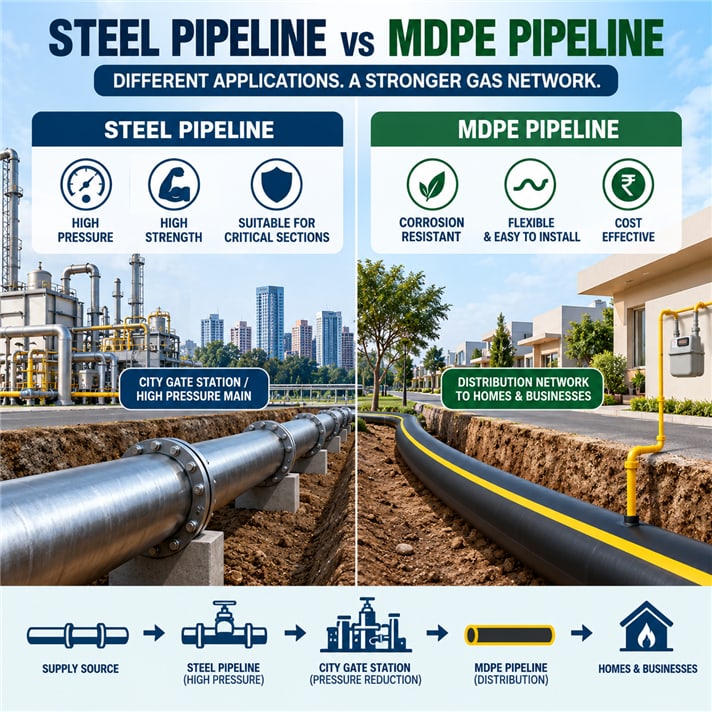
Gas Fields / Imported LNG → Gas Processing or Regasification → Transmission Pipelines → CGD Network or Direct Industrial Supply → End Users
The process generally works as follows:
Step 1: Production or import
Natural gas is extracted from domestic fields or imported as LNG. Imported LNG is converted back into gaseous form at a regasification terminal before entering the relevant gas supply system.
Step 2: Long-distance transportation
High-pressure transmission pipelines transport gas across regions. Transmission and supply arrangements depend on the relevant infrastructure, contracts, and applicable regulations.
Step 3: Supply to distribution networks
A CGD entity obtains gas through the applicable commercial and transportation arrangements and distributes it within its authorised geographical area.
Not all natural gas must pass through a CGD company; some large industrial customers may receive gas through other arrangements.
Step 4: Delivery to customers
The CGD entity may supply:
- PNG to households and commercial establishments
- PNG or other pipeline gas to eligible industrial customers
- CNG to vehicles through dispensing stations
At CNG stations, natural gas is compressed and dispensed using equipment designed for the required operating conditions.
How Does CBG Reach the Market?
Unlike conventional natural gas, which originates from fossil fuel reserves or imported LNG, CBG is produced from renewable organic feedstocks.
Its simplified supply chain is:
Organic Waste → Biogas Production → Gas Upgrading → Quality Testing → Compression / Storage → Transportation → End User
CBG may reach the market through several routes.
Route 1: Supply to a CGD network
CBG can be injected into a suitable gas network when it meets the applicable gas-quality, pressure, metering, interconnection, and regulatory requirements and the relevant commercial arrangements are in place.
Route 2: Direct supply to CNG stations
CBG may be transported in suitable high-pressure cascades to a receiving facility or CNG station equipped to handle it safely. The receiving infrastructure and fuel quality must be compatible with the intended application.
Route 3: Supply to industrial customers
CBG can be supplied to eligible industrial users as a fuel, subject to quality specifications, equipment compatibility, delivery arrangements, and applicable requirements.
The most suitable route depends on plant location, production volume, network access, transportation cost, customer demand, and project economics.
Practical Case Study: Connecting a CBG Plant to the Market
Consider an illustrative project in which a developer establishes a CBG plant using agricultural residues and organic waste.
The plant produces raw biogas, upgrades it to the required quality, and compresses the resulting gas for sale.
The project team evaluates three potential sales routes:
| Route | Main requirement | Key consideration |
|---|---|---|
| CGD network injection | Compatible connection, approved gas quality, metering and commercial arrangements | Network access and injection requirements |
| CNG station supply | Suitable compression, storage, transport and receiving facilities | Distance, delivery logistics and station compatibility |
| Industrial customer supply | Customer-compatible gas quality and delivery system | Demand profile, equipment suitability and commercial terms |
The project team compares these options before selecting a supply strategy. Depending on the location and economics, the plant may supply one route or develop more than one viable route.
The key lesson is that producing CBG is only one part of the business. Reliable purification, quality control, compression, storage, transportation, and market access are also essential to deliver the gas to customers.
Where Does Engineering Fit Into the Gas Value Chain?
Every stage of the gas ecosystem depends on suitable engineering and operating infrastructure.
Depending on the project scope, this may include:
- Compression systems: To raise gas pressure to the required operating level.
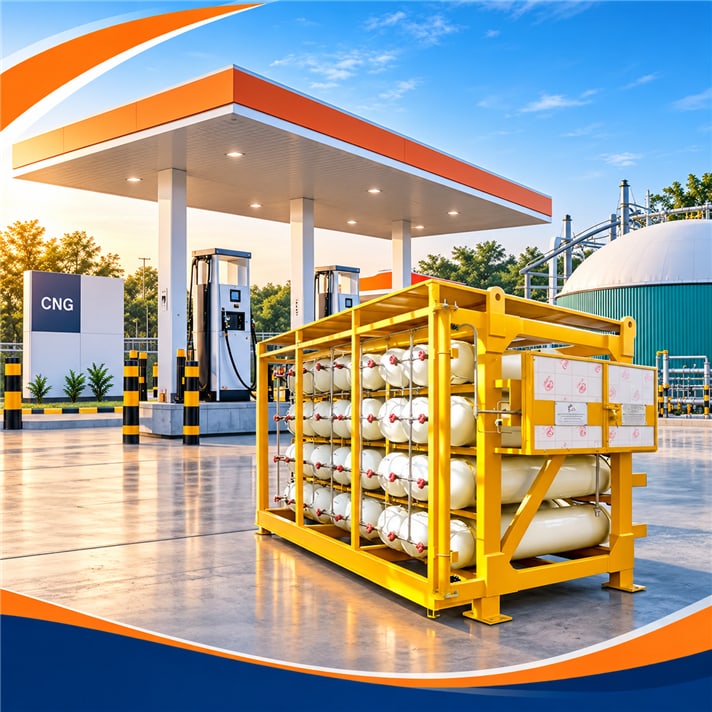
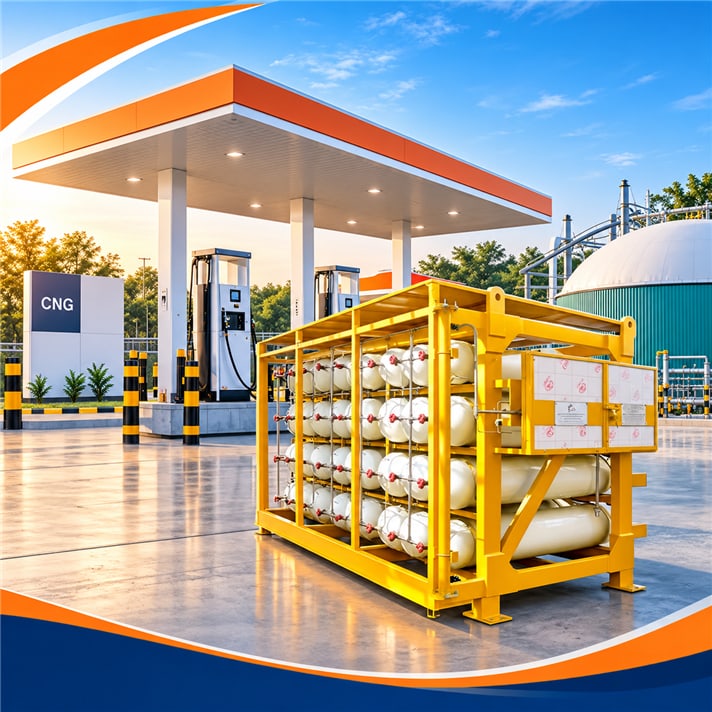
- Storage cascades: To store and transport compressed gas.
- High-pressure tubing and manifolds: To connect equipment and manage gas flow.
- Pressure regulation systems: To reduce or control gas pressure for downstream applications.
- Dispensers and fill posts: To transfer gas into vehicles or transport systems.
- Odorization and gas analysis: Where required by the application and applicable specifications.
- Installation, testing and commissioning: To verify that the system is ready for operation under approved procedures.
The exact equipment and scope depend on the plant design, gas quality, required capacity, pressure levels, applicable standards, and project-specific responsibilities.
Relevance to Urjika Consulting & Engineering Solutions Pvt. Ltd.
For an engineering company serving the CNG, CBG, and clean-energy ecosystem, understanding the complete gas value chain helps connect individual products with the client’s actual requirements.
Urjika’s relevant solution areas can include cascade systems, compression-related equipment, high-pressure tubing and manifold works, CBG gas-handling systems, fill posts, and installation and commissioning services, depending on project scope.
A project-focused approach considers more than the supply of an individual product. It also examines equipment compatibility, required capacity, pressure conditions, safety provisions, integration, and coordination between the various systems.
Key Takeaways
- CNG is compressed natural gas commonly used as a vehicle fuel.
- PNG is natural gas delivered through pipelines to residential, commercial, and industrial customers.
- CBG is upgraded biogas produced from biodegradable feedstocks.
- CGD is the distribution network and business that supplies gas within an authorised geographical area.
- Conventional natural gas reaches the market through production or LNG imports, processing or regasification, transportation, and distribution.
- CBG reaches customers through suitable network injection, direct delivery to compatible stations, or industrial supply arrangements.
- Gas quality, pressure, storage, transportation, safety, and commercial arrangements are crucial at every stage.
Conclusion
India’s gas ecosystem brings together gas producers, LNG suppliers, transmission operators, CGD entities, CBG plant developers, equipment providers, and end users.
CNG and PNG are two ways natural gas is used and delivered, CBG offers a renewable route to producing a compatible gaseous fuel, and CGD provides important last-mile distribution infrastructure.
Understanding how these components work together helps professionals make better decisions in engineering, sales, operations, and project planning.